HR & Payroll
Automated Payroll Processing: How to Run Payroll in Minutes, Not Days
Manual payroll consumes days of HR and finance time every month, introduces calculation errors that erode employee trust, and creates compliance exposure when statutory deductions are filed late or incorrectly. Automation eliminates all three problems.
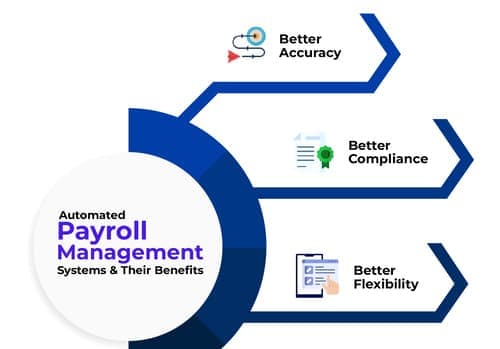
For many businesses in Kenya, payroll month still looks like this: someone pulls data from attendance sheets and leave records into a spreadsheet, manually calculates PAYE using the latest KRA bands, applies NSSF and NHIF deductions, adjusts for allowances and overtime, and then checks the maths three times before sending a payment file to the bank. One wrong formula and twenty employees receive incorrect pay. One missed deadline and the company incurs statutory penalties.
Automated payroll processing replaces this with a workflow that takes inputs once, calculates everything correctly every time, and files the right returns to the right agencies on schedule.
What automated payroll processing actually does
When you run payroll in an automated system, the sequence looks like this:
- Attendance, leave, and overtime data feed in from the HR module — no manual transfer.
- The system applies each employee's salary structure: basic pay, allowances, commissions, and deductions.
- Statutory deductions — PAYE, NSSF, NHIF, and HELB where applicable — are calculated automatically against the current regulatory rates.
- Net pay is computed for every employee. Payslips are generated and can be distributed digitally.
- A bank payment file is produced in the format your bank requires, ready for upload or direct transfer.
- Statutory returns are compiled for filing with KRA and the relevant agencies.
The whole process runs in minutes. Reviewing and approving it takes another few minutes. The calculation errors and late-night spreadsheet sessions stop entirely.
Statutory deductions handled automatically
Getting Kenyan statutory deductions right requires staying current with rates that change periodically:
PAYE
Pay As You Earn is calculated on a graduated scale against the KRA tax bands. The system applies the correct band to each employee's gross taxable income, applies the personal relief, and produces the net tax liability without manual intervention. When bands change, the system is updated — you do not need to revise every employee record.
NSSF
National Social Security Fund contributions are calculated per the current rates and employer matching obligations. The system tracks both employee and employer portions and includes them in the statutory returns.
NHIF / SHA
National Hospital Insurance Fund deductions are applied based on the graduated contribution table. The system produces the monthly NHIF payment schedule automatically.
HELB
For employees with active Higher Education Loans Board repayment obligations, the correct monthly amount is deducted per the employee's repayment schedule and included in the payment file.
Handling allowances, benefits, and multi-currency payroll
Most Kenyan businesses pay more than basic salary. House allowance, transport, medical, and performance bonuses need to be configured once per employee or role and applied consistently every cycle. For organisations with staff in multiple countries, multi-currency payroll handles exchange rates and local compliance requirements without a parallel process.
Audit trails and compliance confidence
Every payroll run is logged — who approved it, when, and what changed from the previous cycle. If KRA or a labour inspector requests records, the system can produce a complete audit trail for any period. This is the kind of documentation that takes days to assemble manually and seconds to export from a properly configured HRMS.
What to check before switching to automated payroll
- Are all employee records accurate and complete — PIN numbers, ID numbers, bank details?
- Are salary structures, allowances, and deduction rules documented and ready to configure?
- Does the system support your bank's payment file format?
- Can it produce KRA-ready iTax export files?
- Is there an approval workflow so payroll is reviewed before payment?
- Will it integrate with your accounting system so payroll journals post automatically?
Run accurate, compliant payroll every cycle
Tessera HR automates the full payroll cycle — PAYE, NSSF, NHIF, HELB, bank transfers, and statutory returns — with built-in Kenyan compliance and an audit trail for every run.
Related Solutions
Products that match this guide
Tessera HR & Payroll
Manage employee records, payroll, leave, approvals, compliance, and self-service workflows.
Explore HR & PayrollTessera Time & Attendance
Track shifts, biometric attendance, overtime approvals, exceptions, and payroll-ready exports.
Explore AttendanceTessera ERP
Connect inventory, purchasing, accounting, HR, POS, and reporting in one business platform.
Explore Tessera ERPKeep Reading
More Articles

Best HR System in Kenya (2025): What Growing Businesses Are Switching To
Most HR systems are built for markets with different tax regimes, different statutory obligations, and different employment laws. A system that is genuinely Kenya-ready handles PAYE, NSSF, NHIF, and HELB correctly — not approximately — and keeps you compliant with the Employment Act without a compliance consultant reviewing every payroll run.
Read article →
Employee Self-Service Portal: How It Reduces HR Queries by Half
If your HR team spends significant time each week answering the same questions — "Can I get my payslip?", "How many leave days do I have left?", "Can you update my bank details?" — a self-service portal eliminates most of that workload at the source.
Read article →
How to Run a Multi-Store Business Like a Pro
Learn how to efficiently operate businesses with multiple locations and warehouses. Discover strategies, best practices, and how ERP systems can help streamline your operations.
Read article →