Retail Operations
POS System vs Traditional Cash Register: Why Modern Retail Is Moving On
A cash register does one thing: record that money changed hands. A modern POS system does everything that happens before and after that moment — and that difference is where retail businesses are won or lost.
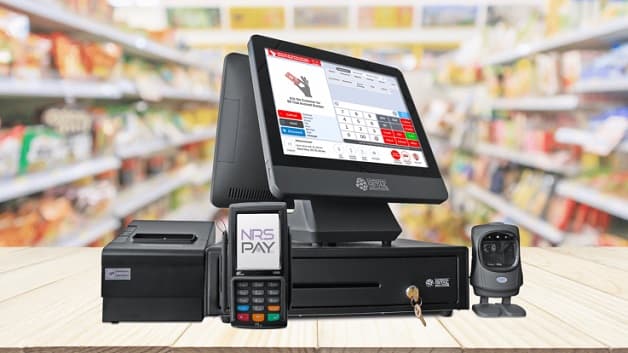
Many small and mid-size retail businesses in Kenya still run on traditional cash registers or basic billing software. It works — until the business grows to two branches, hires its fifth cashier, or tries to understand why stock keeps disappearing without a clear explanation. At that point, the limits become painful and expensive.
A modern POS system is not just a better cash register. It is a fundamentally different tool, designed around the reality that retail operations involve inventory, customers, promotions, staff, and multiple locations — not just transactions.
What a traditional cash register does well — and where it stops
A cash register reliably handles one job: recording a sale and opening the drawer. For a single-location, low-volume business with simple products and no inventory tracking needs, that is sometimes enough.
But it does not:
- Track stock levels or alert you when items run low
- Store customer information or support loyalty programmes
- Apply promotions or discount rules automatically
- Generate sales reports by product, category, or time period
- Sync with accounting so finance can close without manual exports
- Work across multiple branches under one dashboard
- Accept M-PESA or split payments natively
Every one of those gaps creates manual work — spreadsheets, stocktakes, data entry — that consumes staff time and introduces errors.
What a modern POS system adds
Live inventory management
Every sale instantly reduces stock. Low-stock alerts fire automatically. No more discovering at 4pm that you sold the last unit at 10am.
Flexible payments
Cash, M-PESA, card, store credit, and split payments — all handled natively and posted to the right accounts automatically.
Customer profiles and loyalty
Purchase history, points balances, and personalised promotions turn one-time buyers into repeat customers.
Automated promotions
Bundle deals, time-limited discounts, and coupon codes apply at checkout automatically — no cashier memory required.
Real-time sales analytics
Best-selling products, hourly trends, cashier performance, and margin reports — available the moment a sale is made, not the morning after.
Multi-branch management
All branches share one product catalogue, pricing ruleset, and customer database. Head office sees everything from a single dashboard.
Signs your business has outgrown a cash register
- You do a manual stocktake more than once a month because numbers keep drifting.
- Finance spends significant time re-keying sales data into accounting.
- You cannot tell which products are most profitable without building a spreadsheet.
- Cashiers apply discounts inconsistently because there are no enforced rules.
- You have or are planning a second location and have no way to compare them.
- Customers ask about a loyalty programme and you have nothing to offer.
Switching checklist
- Export your current product list. Even from a basic system, get everything into a spreadsheet first.
- Clean the catalogue. Remove duplicates, fix names, assign categories and correct tax codes.
- Choose hardware that fits your floor plan. Tablet-based POS gives you flexibility; countertop terminals give you speed.
- Map payment methods to accounts. Decide how cash, M-PESA, and card each post in your accounting system before go-live.
- Train on the full workflow. Sales, returns, voids, end-of-day close — not just basic checkout.
- Run parallel for one week. Keep both systems running while your team builds confidence, then cut over cleanly.
Ready to make the switch?
Tessera POS is built for Kenyan retail businesses — from single stores to multi-branch chains. M-PESA payments, live inventory, loyalty programmes, and direct accounting integration included.
Related Solutions
Products that match this guide
Tessera POS
Run fast checkout, inventory sync, M-PESA payments, branch reporting, and retail controls.
Explore Tessera POSTERP Accounting
Manage reconciliations, AP/AR, VAT reporting, budgets, cashflow, and audit-ready controls.
Explore AccountingTessera ERP
Connect inventory, purchasing, accounting, HR, POS, and reporting in one business platform.
Explore Tessera ERPKeep Reading
More Articles

How to Run a Multi-Store Business Like a Pro
Learn how to efficiently operate businesses with multiple locations and warehouses. Discover strategies, best practices, and how ERP systems can help streamline your operations.
Read article →
Best POS System in Kenya (2025): A Buyer's Guide for Retailers and Restaurants
Not every POS system is built for the Kenyan market. M-PESA integration, offline capability, KRA-compliant VAT reporting, and local support are not optional extras here — they are the baseline. This guide covers what to look for and what questions to ask before you commit.
Read article →
POS Inventory Management: How to Stop Stockouts Before They Happen
A stockout is not just a missed sale — it is a customer who walked to a competitor and may not come back. POS inventory management gives you the visibility to reorder before shelves empty and the data to stop over-ordering what sits unsold.
Read article →